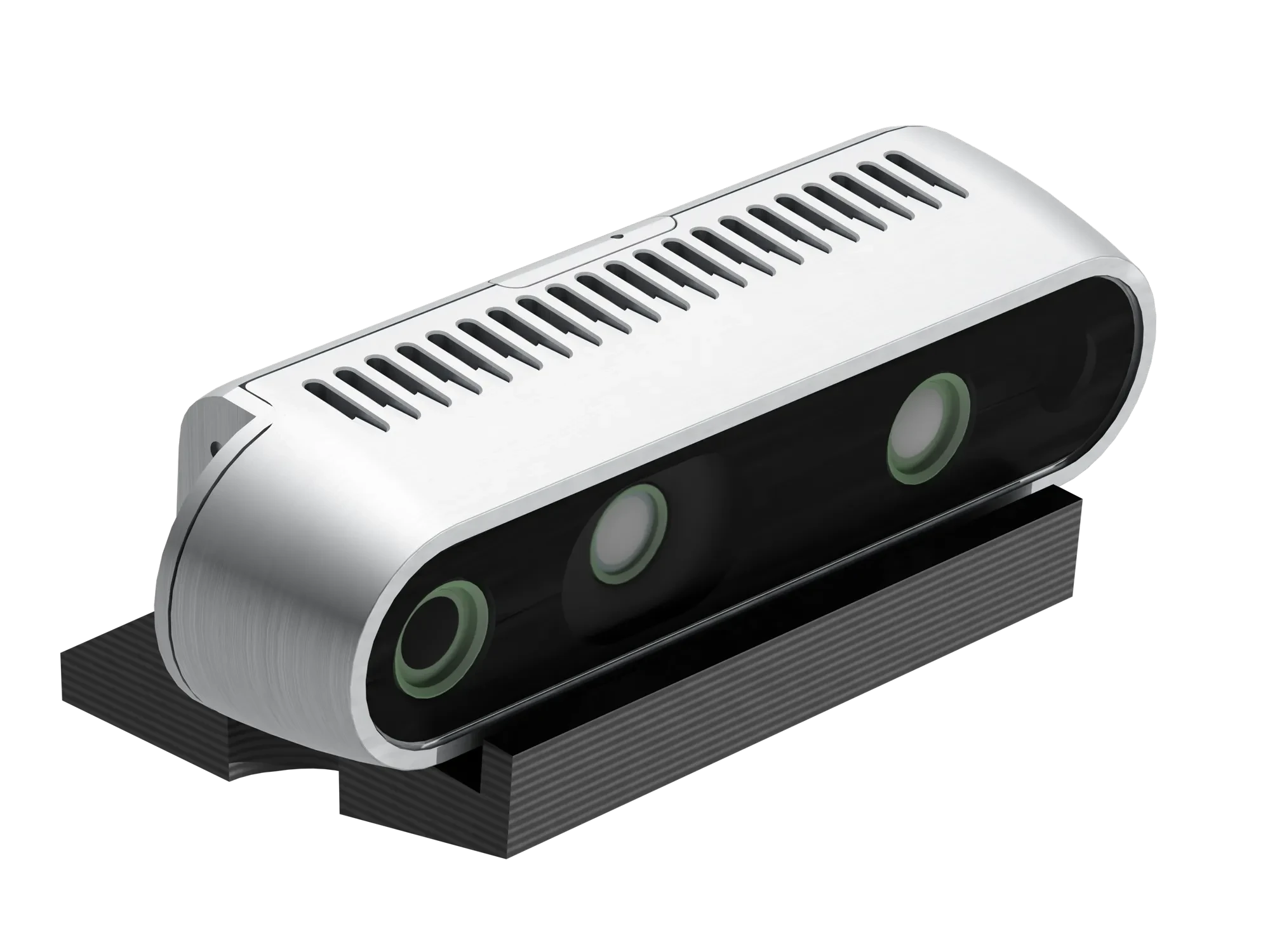
Intel RealSense D435i Depth Camera
The intel realsense d435i depth camera: Intel's stereo depth module with a built-in 6-DoF IMU — the same camera family Unitree fits in the G1 head, sold as the genuine retail box.
- Unitree G1
- Unitree H1
- Unitree H1-2
- Unitree H2
About the Intel RealSense D435i Depth Camera
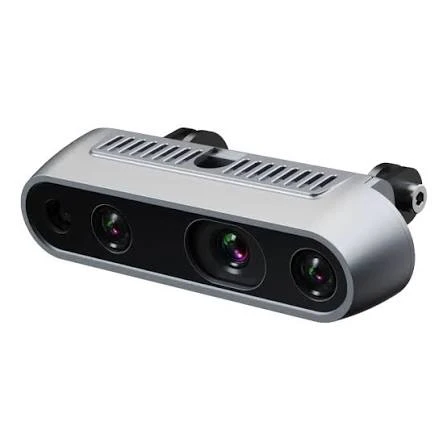
The Intel RealSense D435i depth camera is a stereo vision instrument that measures how far away things are, not just what they look like. Two infrared cameras read the scene through a single wide field of view, an active IR projector textures flat surfaces, and the on-board Vision Processor D4 turns the parallax into depth frames at up to 90 fps. A built-in 6-DoF IMU adds motion sensing to the same USB stream, which is why the D435i became the default depth camera for mobile robotics: one cable carries depth, colour and inertial data.
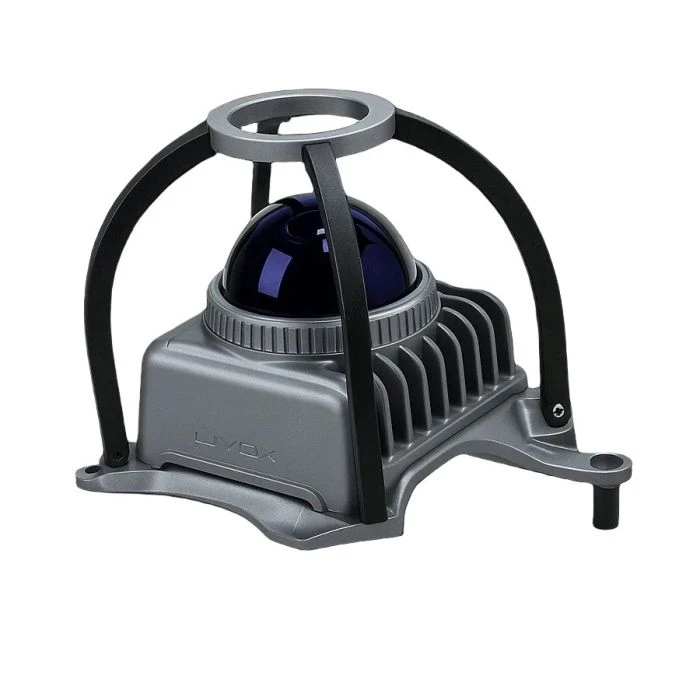
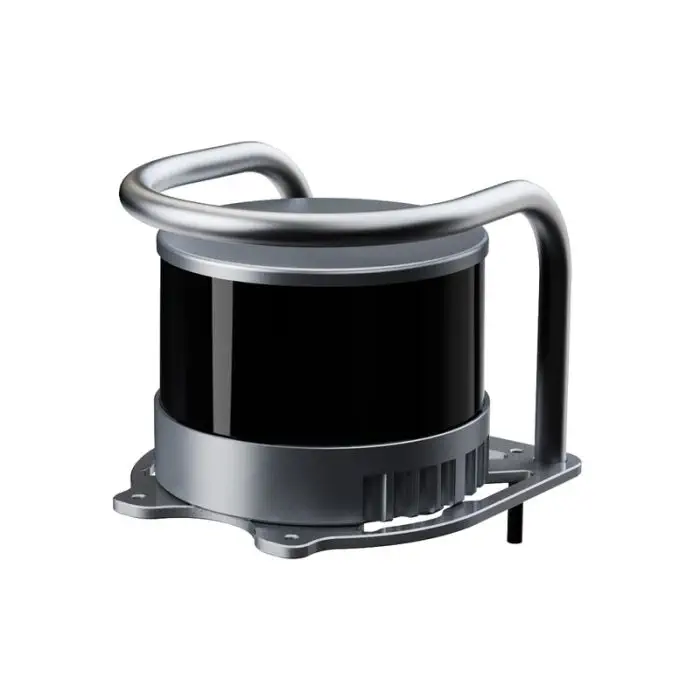
It is also the camera behind Unitree's humanoid head vision: Unitree's own head-camera part for the G1, listed as G1-DCAMERA, is this exact sensor, paired at the factory with a Livox MID-360 LiDAR, and the H1 and H1-2 carry the same Intel RealSense head-camera family. For a lab or integration team, that makes the intel realsense d435i depth camera the straightforward way to replicate the factory configuration, add a second viewpoint, or replace a worn unit — without revalidating an untested sensor.
This listing is the genuine Intel retail box: camera, cable and documentation, ready for RealSense SDK 2.0 and the ROS/ROS2 wrappers. It is a general-purpose USB 3.1 peripheral, not a robot-specific part — the compatibility section below covers the Unitree platforms it is proven on.
D435, D435i, D435f or D435if — Which RealSense Is This?
The D400 family shares one stereo depth engine, and the suffixes mark two independent options. The plain D435 has no IMU. The D435i — this listing — adds the 6-DoF BMI055 inertial sensor for visual-inertial work. The D435f keeps the D435's sensor set but adds an IR-pass filter: only infrared light reaches the imagers, which steadies depth on repetitive patterns and reflective surfaces — warehouse racking, polished floors — where unfiltered stereo struggles. The D435if combines both. If your project involves robot motion or VIO, the intel realsense d435i depth camera is the variant built for it.
What the Intel RealSense D435i Depth Camera Adds to a Robot
The depth engine reads the world through a pair of global-shutter imagers with an 87° × 58° field of view. Global shutter is the quiet detail that matters most on a robot: every pixel in a frame is exposed at the same instant, so the walking vibration, panning and bumps that blur rolling-shutter depth cameras simply do not appear here. The 0.3–3 m ideal range and the 28 cm minimum distance are tuned for exactly the space a manipulator or head-mounted sensor actually works in — from the floor just below the robot out to across the room.
The IMU is the reason to pick this variant over the plain D435. A Bosch BMI055 accelerometer and gyroscope stream 6-DoF motion data over the same USB cable as the depth frames, time-stamped for fusion. Be clear about what it does not do: the intel realsense d435i depth camera does not run SLAM on board. It delivers raw, calibrated depth plus inertial measurements, and the fusion happens host-side in RealSense SDK 2.0 or the ROS/ROS2 wrapper — which is where your navigation stack wants the data anyway.
Software is a solved problem. RealSense SDK 2.0 is open source, the ROS and ROS2 wrappers are maintained, and the camera enumerates as a standard USB 3.1 video device on Linux without custom drivers. Depth, aligned RGB and IMU streams arrive with hardware timestamps, so visual-inertial pipelines such as VINS-Fusion or RTAB-Map start from calibrated inputs rather than integration plumbing.
Which Robots Does the Intel RealSense D435i Depth Camera Fit?
This is a general-purpose Intel peripheral, not a robot-specific part — and its strongest compatibility evidence is the factory line-up. Unitree fits the intel realsense d435i depth camera family in the G1's head from the factory, where it feeds the robot's visual perception; the earlier H1 and H1-2 and the newer H2 use the same Intel RealSense head-camera scheme. For those platforms this camera is the same instrument the robot already has: a drop-in replacement for a worn unit, a second viewpoint for a research rig, or a bench spare that needs no revalidation.
Beyond Unitree, anything that speaks USB 3.1 and ROS can use it. Mobile bases, arms on fixed stands, AMRs and custom research platforms all enumerate the camera the same way; mounting is a 1/4-20 tripod thread plus two M3 points, so standard brackets fit without machined parts. If your platform is not listed and you are unsure about cable routing or compute headroom, ask us and we will confirm the setup for your robot before you order.
- Unitree G1 — factory head-mounted depth camera; direct replacement or second viewpoint
- Unitree H1 / H1-2 — same Intel RealSense head-camera family
- Unitree H2 — current head vision platform, same camera family
- Any USB 3.1 ROS / ROS2 platform — standard UVC + SDK 2.0 enumeration
Specifications
| Type | Active IR stereo depth camera (Intel RealSense D430 module, Vision Processor D4) |
| Depth resolution | Up to 1280 × 720 @ 30 fps; 848 × 480 @ up to 90 fps |
| Depth field of view | 87° × 58° (H × V) |
| Ideal range | 0.3 – 3 m (functional ranging to ≈10 m) |
| Minimum depth distance | ≈0.28 m @ 1280 × 720; ≈0.105 m @ lower resolutions |
| Accuracy | < 2% at 2 m |
| RGB camera | 1920 × 1080 @ 30 fps, rolling shutter, 69° × 42° FOV |
| Shutter | Global shutter (depth), rolling shutter (RGB) |
| IMU | 6-DoF Bosch BMI055 — 3-axis accelerometer + 3-axis gyroscope |
| Interface | USB-C 3.1 Gen 1 |
| Dimensions | 90 × 25 × 25 mm |
| Weight | ≈72 g |
| Mounting | 1 × 1/4-20 UNC thread; 2 × M3 threaded points |
| Part number | 82635D435IDK5P |
| In the box | 1 × Intel RealSense D435i depth camera · 1 × USB-C to USB-A cable · 1 × mini tripod · Intel RealSense user manual |
Shipping & Genuine-Stock Assurance
RealSense availability has tightened since Intel narrowed the line, and listings mixing refurbished, remanufactured and grey-import units have multiplied. This listing is the opposite: a genuine Intel retail-box unit, verifiable by part number 82635D435IDK5P, and every unit is 100% quality-inspected before it ships, so it arrives in perfect working order.
The aluminium body and glass optical windows need no special handling in transit — we pad the retail box inside a rigid outer carton and ship worldwide. If you are building a multi-sensor rig, a spare battery or an expansion dock for your Unitree robot travels in the same parcel.
Last updated: September 2026.
Frequently Asked Questions
Can't find what you're looking for? Contact our