Unitree MID360 LiDAR
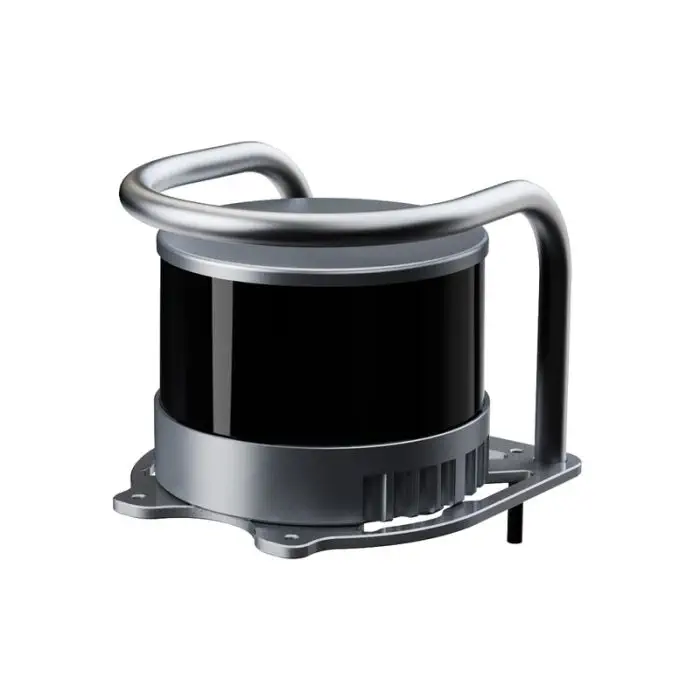
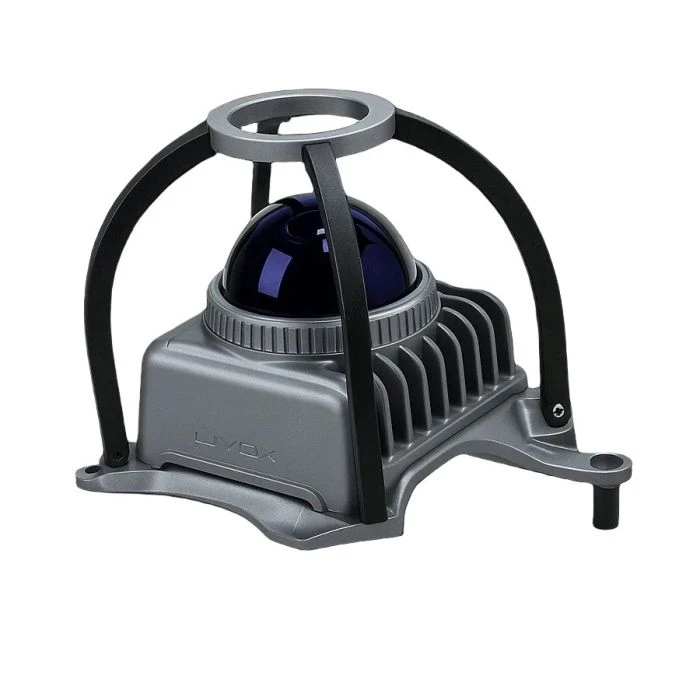
MID360 lidar as the official Unitree accessory: the Livox hybrid solid-state navigation sensor sold in kit form — 360° × 59° FOV, with mounting bracket, custom cable and metal protective frame.
- Unitree Go2 EDU
- Unitree Go2-W
- Unitree G1
- Unitree R1
- Unitree AS2
About the Unitree MID360 LiDAR
The MID360 lidar is Unitree's compact navigation sensor for robots that need to know where they are, not just what stands in front of them. Built around the Livox Mid-360 hybrid solid-state sensor and delivered as an official Unitree accessory, the mid360 lidar in this listing arrives as a complete kit: sensor, mounting bracket, custom connection cable and metal protective frame, with integration support included. It is the same instrument Unitree fits at the factory on Go2, G1, R1 and AS2 configurations, so it drops into an existing robot instead of starting an integration project from zero.
A robot that only avoids obstacles reacts; a robot that maps its world navigates. The MID360 lidar gives a Go2, G1 or AS2 a dense, three-dimensional picture of its surroundings in every direction at once — the raw material SLAM algorithms turn into maps, localisation and autonomous patrol routes. Where the built-in obstacle sensors on these robots tell them something is there, this sensor tells them where they are.
This listing is for the complete Unitree kit. Teams comparing it with the bare Livox sensor sold for general robotics will find the difference spelled out below; teams ready to order can check the compatibility list and request a quote for their robot.
Bare Sensor or Unitree Kit — Which MID360 lidar Is This?
Livox sells the Mid-360 on its own for developers and AMR integrators — the sensor and a generic cable, nothing robot-specific. This listing is the Unitree kit built around the same sensor: a mounting bracket shaped for your robot, a custom connection cable, a metal protective frame around the head, and integration support for Unitree's navigation stack. If you are fitting a Go2, G1, R1 or AS2, this is the version that arrives ready to bolt on.
What the MID360 lidar Adds to Your Robot
The MID360 lidar reads the world through a rotating-mirror hybrid solid-state engine: a 905 nm laser swept across a full 360° horizontal circle and a 59° vertical arc, from -7° up to +52°. That upward bias is deliberate — the instrument sees over desks, shelves and kerbs while still covering the floor plane, which is exactly the geometry a robot needs for localisation. There is no large rotating head: the whole sensor measures 65 × 65 × 60 mm and weighs 265 g, small enough to sit on a Go2's back or inside an AS2's sensor pod without fighting for payload.
The numbers translate directly into map quality. 200,000 points per second at a 10 Hz frame rate gives roughly 40-line-equivalent density; the 0.1 m blind zone means floor clutter right in front of the robot is still measured; and ranging reaches 70 m on reflective targets outdoors, 40 m at 10% reflectivity. A built-in ICM-40609 IMU is fused with the point stream inside the unit, so LIO stacks get time-aligned motion data without a separate IMU board. Data leaves over 100BASE-TX Ethernet with PTPv2 or GPS sync, and Livox's SDK2 and ROS drivers cover the software side.
It is also built for robot duty rather than a lab bench: IP67 sealing, an operating range of -20 °C to +55 °C, and an active anti-interference mode that keeps the false alarm rate under 0.01% even in 100 klx sunlight or beside other laser sensors. The laser is Class 1 eye-safe, so the sensor can run around people without safety fencing.
Which Robots Does the MID360 lidar Fit?
On the Go2, the mid360 lidar is a catalogued accessory — the Go2-MID360 kit — and the same sensor ships from the factory on the Go2 EDU and Go2-W LiDAR configurations; Unitree's Go2-W developer documentation lists it as a supported SLAM sensor. One dependency to plan for: Unitree's own navigation algorithm on the Go2 runs on the expansion dock (100 Tops), so the dock belongs on the shopping list next to the sensor.
On the G1 the kit is sold with a purpose-shaped bracket, cable and frame under the G1-MID360L accessory number. The R1 and AS2 carry this same sensor as standard perception equipment from the factory — the R1 pairs it with a binocular camera, and the AS2 Edu LiDAR configurations list it with navigation-algorithm support — so the kit you receive matches the factory fit. The sensor was also offered for the earlier H1 and H1-2 platforms.
- Unitree Go2 EDU — catalogued accessory kit; factory-fitted on the LiDAR configuration
- Unitree Go2-W — supported SLAM sensor per Unitree developer documentation
- Unitree G1 — G1-MID360L kit with bracket, cable and frame
- Unitree R1 / AS2 — standard factory perception sensor
- H1 / H1-2 — earlier platforms, same sensor family
Specifications
| Type | Hybrid solid-state 3D LiDAR (Livox Mid-360) |
| Ranging distance | 0.1 – 70 m (40 m @ 10% reflectivity, 70 m @ 80%) |
| Accuracy | ≤ 2 cm range precision @ 10 m; < 0.15° angular precision (1σ) |
| Point rate | 200,000 pts/s (first return), 10 Hz frame rate |
| Field of view | 360° horizontal × 59° vertical (-7° to +52°) |
| Point cloud density | 40-line equivalent |
| IMU | Built-in ICM-40609 |
| Dimensions | 65 × 65 × 60 mm |
| Weight | 265 g (sensor) |
| Protection / laser | IP67, -20 °C to +55 °C; 905 nm, Class 1 eye-safe |
| Power | 9–27 V DC, 6.5 W average |
| In the box | 1 × MID360 lidar sensor · 1 × mounting bracket · 1 × metal protective frame · 1 × custom connection cable |
Shipping & Sensor Care
Every mid360 lidar kit is 100% quality-inspected before it ships, so it arrives in perfect working order. The sensor is a precision optical instrument: we ship it in rigid, shock-absorbing packaging with the optical window protected, and the IP67-sealed housing needs no maintenance beyond keeping that window clean and dry.
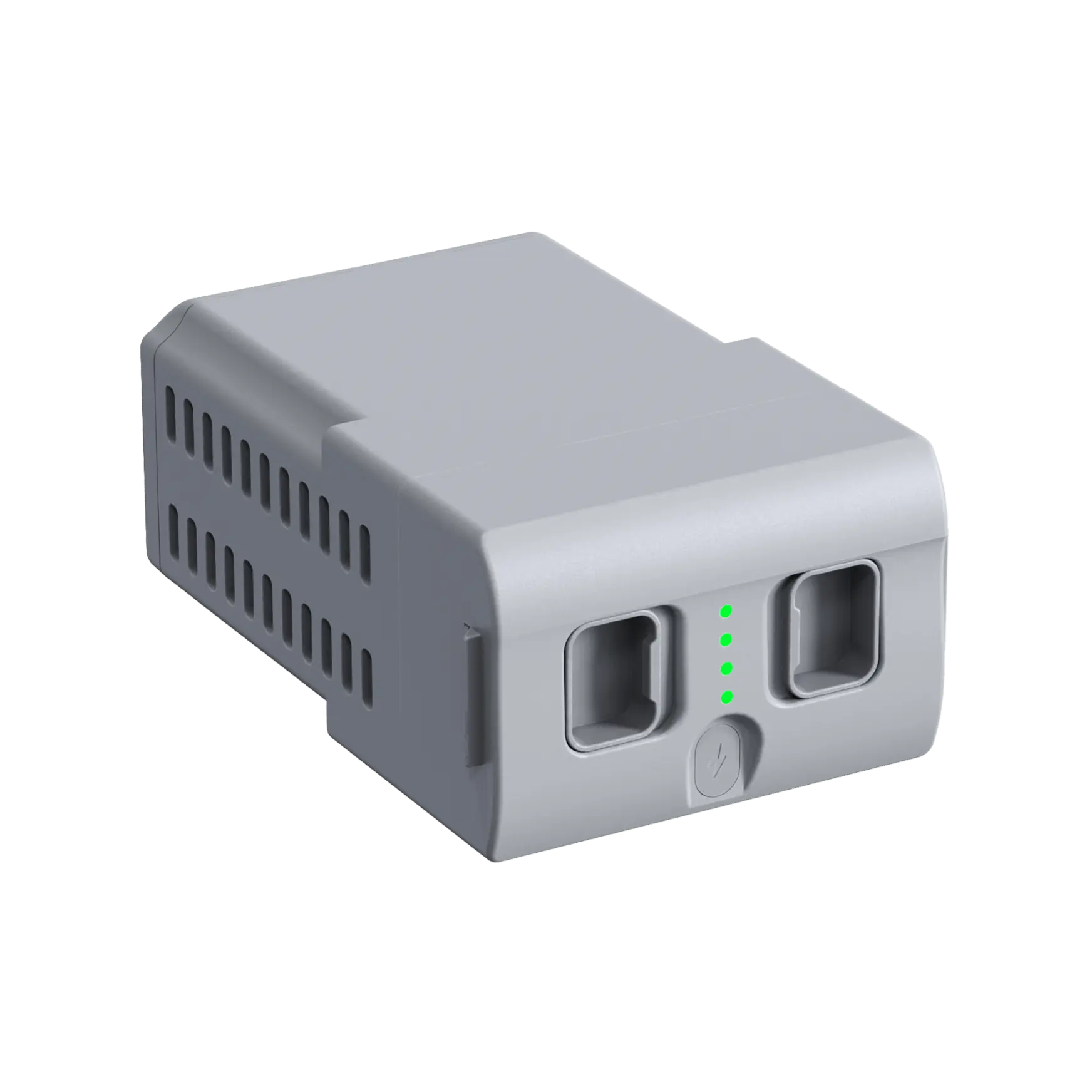
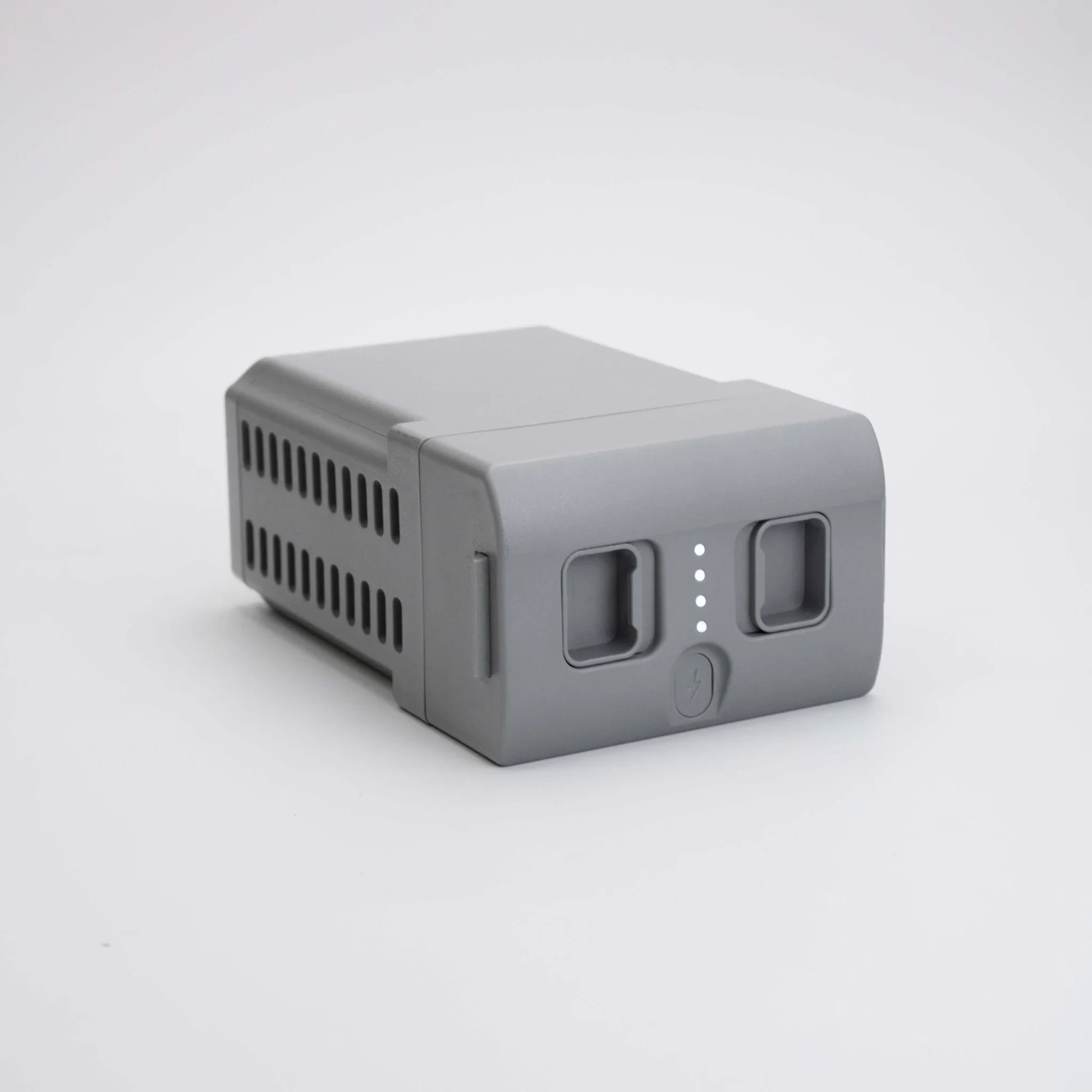
Store the sensor in its metal protective frame, avoid touching the optical window, and let any condensation dry at room temperature before powering it up. A spare battery for your robot travels in the same parcel if you are stocking up for a deployment.
Last updated: September 2026.
Frequently Asked Questions
Can't find what you're looking for? Contact our